Technology & Smart Buildings Hub

Discover how technology is transforming the workplace, elevating business and employee performance. Through powerful technology and digital experiences, these sessions will help you gain the knowledge you need to better support and engage your employees in achieving your organsation's goals and vision.


Loading
10:30
  1. Technology & Smart Buildings Hub
    30 mins

    We believe we know how offices are used. But the data tells a different story. Across more than 600,000 workplace data points collected from multiple office buildings, consistent patterns emerge and they challenge many of the assumptions still guiding workplace planning today. Frustration around meeting rooms is common. The default explanation is lack of space. 

    But when behavior is analyzed in detail, the issue is rarely volume it is mismatch.

    • Mismatch between room size and meeting size.
    • Mismatch between distribution and demand.
    • Mismatch between design intent and actual work patterns.

    In this session, Hodan Aden presents how occupancy data and optimisation models can:

    • Replace subjective planning with measurable work patterns
    • Reveal why availability problems often occur despite sufficient space
    • Support right-sizing without compromising functionality
    • Improve both user experience and building performance

    Empire AI’s peer-reviewed research shows that it is possible to significantly reduce unnecessary meeting room area while maintaining availability. This is not about cutting space. It is about designing for reality. 

11:15
  1. Technology & Smart Buildings Hub
    30 mins

    Facilities management used to be simple: if nothing broke, you were doing a good job. Not anymore.

    AI is accelerating, sustainability is non-negotiable, and expectations keep rising. Staying reactive won’t cut it and invisibility is no longer a strategy.

    In this session, Rui Santos Couto,CMO at Infraspeak and one of the leading global voices in FM, challenges the industry’s comfort zone and lays out a new mandate for facilities managers: move from operator to orchestrator.

    Based on more than a decade working alongside FM leaders across Europe, Africa and Latin America, Rui explores how collaboration, artificial intelligence and sustainability are reshaping the role of FM at the centre of organisational performance. If you’re ready to stop firefighting and start shaping outcomes, this is where the shift begins.

12:45
  1. Technology & Smart Buildings Hub
    45 mins
    Join us to explore how AI is reshaping workplace and facilities strategy, and what it means for leaders navigating uncertainty. As organizations rethink consolidation, growth, hybrid work, and complex portfolio decisions, the conversation will spotlight how technology can support, not replace human judgment. The discussion will also introduce an emerging operating model for workplace decision-making, designed to help workplace teams clearly see their options and move forward with confidence. Together, the session will unpack how AI-powered intelligence can bring greater clarity, agility, and strategic confidence to modern portfolio management.
14:30
  1. Technology & Smart Buildings Hub
    30 mins

    Return-to-work initiatives are back - but many organisations aren’t as prepared as they thought. Companies that downsized offices and parking during the pandemic now face an uncomfortable reality: everyone wants to come in on the same three days, and the remaining infrastructure can’t handle it, frustrating staff and creating friction in an otherwise great workplace experience.

    In this session, we’ll show how parking data, travel policy, and smarter prioritisation can help redistribute workplace demand across the week — without blanket mandates, HR headaches, or additional infrastructure investment. The talk will cover:

    • Why your booking platforms aren’t solving the problem - and what’s missing

    • Why occupancy data alone doesn’t tell the full story

    • How parking policy can actively shape when and how staff come in

    • Three practical steps to move from reactive chaos to data-driven control

    • How this connects to ESG goals, Scope 3 emissions, and commuter travel data

    This isn’t just about parking or travel. It’s about giving workplace and facilities leaders a powerful, immediately actionable way to manage demand, improve the employee experience, and make the most of the space and infrastructure they already have - turning a daily challenge into a strategic advantage.

15:15
  1. Technology & Smart Buildings Hub
    30 mins

    Most cyber training programmes look successful on paper, high completion rates, neat dashboards, compliance ticked. But what if the real risk is hiding in plain sight?

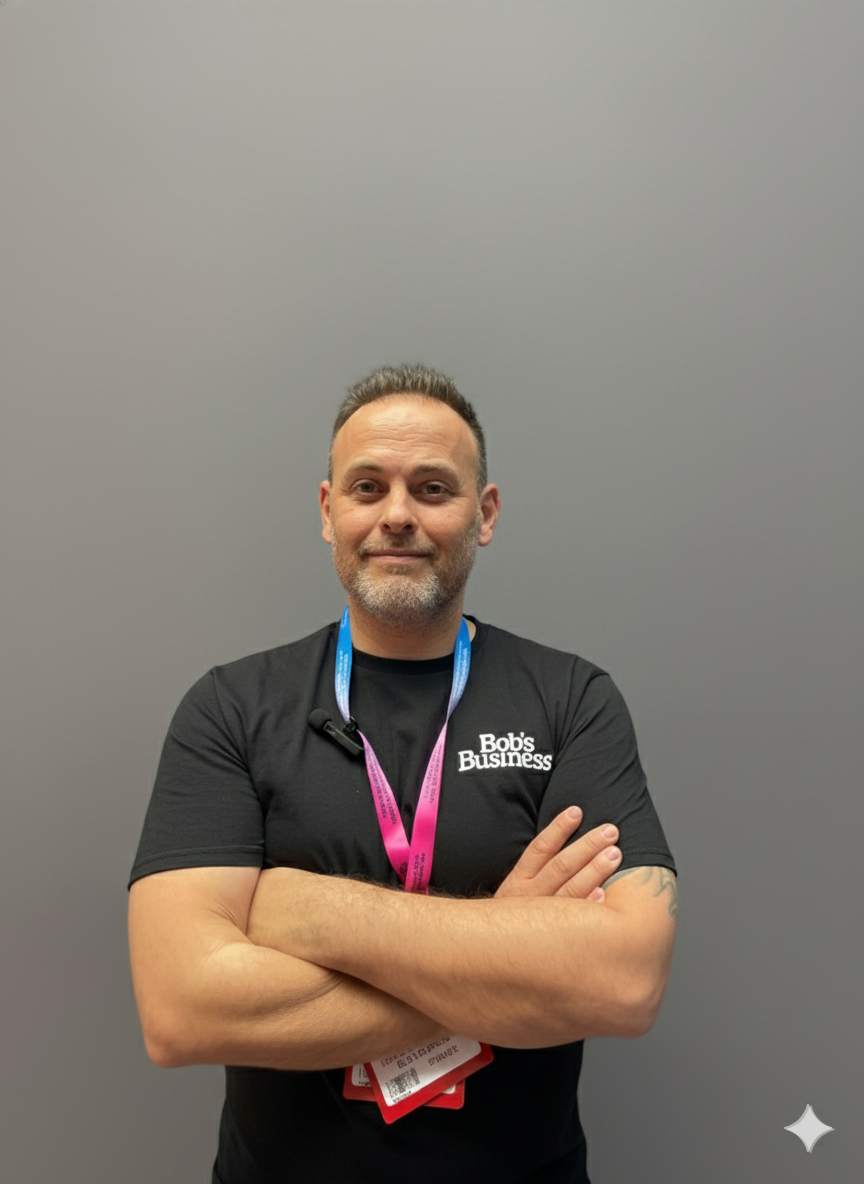
    In this talk, Neil Frost, CEO of Bob’s Business, argues that disengaged training doesn’t just fail, it creates false confidence. When people are bored, they don’t learn judgement, they learn how to get through the module as fast as possible.

    Drawing on 20 years at the forefront of security awareness, Neil explores why engagement isn’t a “nice to have”, but a critical risk control. He’ll unpack how boring, fear-led training actively trains the wrong behaviours and what high-performing organisations do differently to make security stick under real-world pressure.

    This is a practical, honest session for leaders who suspect their metrics look better than their reality and want to fix that gap before it turns into an incident.

10:30
  1. Technology & Smart Buildings Hub
    30 mins

    Most workplace decisions today are based on incomplete and often misleading data.

    A single utilisation metric might look convincing. A dashboard might show 40%, 50%, even 60%. But like the classic “glass half full or half empty” analogy, that number on its own doesn’t tell you what you need to know and in some cases, it can lead you in the wrong direction.

    This session challenges the idea that one number can define workplace performance.

    We’ll explore how to “tame” your data by combining multiple perspectives, from entry data and desk sensors to behavioural insights that reveal what’s really happening when people aren’t at their desks. In many organisations, this missing layer accounts for over 30% of workplace activity, yet it’s rarely measured, understood, or factored into decisions.

    If you’re relying on averages, snapshots, or a single percentage, you may only be seeing part of the picture and making decisions that are more costly than you realise. After all if you have your head in the oven and your feet in the fridge some statisticians will say you are at average temperature.

    We’ll show how to move beyond fragmented metrics to a true source of truth, and how those who can interpret this data properly are creating real value whether by influencing better workplace strategy, building stronger business cases, or turning insight into new consultancy and career opportunities.

11:15
  1. Technology & Smart Buildings Hub
    30 mins
    Sharing candid insights from 13 private roundtables across 6 cities, and what 300 million square feet of occupancy data confirms about how we're actually working.
12:00
  1. Technology & Smart Buildings Hub
    30 mins

    Organisations have never invested more in workplace technology and employees have never been less connected to how they work. The problem isn't the tech. It's that technology is being procured by technology departments. Software is being bought, not experiences designed. And five generations of employees are being handed tools without ever being asked what they actually need. What if the real strategy isn't the platform, it's the people?

    Leagh and Tom bring two lenses workplace technology and culture to make the case that the organisations seeing real adoption aren't rolling out from the centre. They're co-creating with their people. Using employee insight and data to design solutions together, then building the cultural conditions for those solutions to stick. Expect real data from Mitie's workforce research, a practical methodology for getting technology to actually land, and three things every workplace leader can act on immediately.

12:45
  1. Technology & Smart Buildings Hub
    45 mins

    As organisations embrace hybrid working and smarter ways of operating, flexibility has become central to the modern workplace. In this session, Tom Woodley explores how businesses can design adaptable environments that support changing needs while maintaining resilience and continuity.

    Focusing on real-world applications, Tom will highlight how smart workspace solutions and data-led insights enable organisations to optimise space, improve efficiency and respond to change with confidence. The session will demonstrate how combining flexibility with intelligent design and technology creates workplaces that are not only agile, but truly future-ready.

13:45
  1. Technology & Smart Buildings Hub
    30 mins
14:30
  1. Technology & Smart Buildings Hub
    30 mins

    Modern workplaces are under increasing pressure to make better use of space, yet many leaders still struggle to answer simple questions about how offices are actually used. Some organisations operate with little or no data. Others rely on booking systems, while some are beginning to incorporate sensor or badge data, often without a clear understanding of which occupancy and usage metrics to track or how to use the data to support better decisions.

    This session explores how occupancy analytics helps leaders understand utilisation patterns, optimise space, forecast demand, and support hybrid work strategies. Whether starting with limited visibility or building on existing data, the goal is not simply to generate more data, but to ensure the right data is captured and used to make the decisions that matter about office design, real estate portfolios, and workplace experience.

15:15
  1. Technology & Smart Buildings Hub
    30 mins

    Everything happens somewhere, and increasingly, things now happen in two places: physical and digital. This is the essence of the modern-day digitised workplace. The digital realm is increasingly being used to manage and control the physical space, and the effectiveness of this management is determined by how accurately these two realms reflect each other.

    In property and facilities management, our role is to provide spaces where activities can occur. We strive to optimise these spaces to meet the needs of their users in the most efficient and effective manner. Delivering the best service requires a precise and ongoing dialogue between the users of the space, the properties that house these spaces, and the entities responsible for their upkeep. Technology plays a key role in facilitating this conversation, but it does not create value on its own.

    This session will share insights and lessons learned on how to transform technological innovation into real business value by bringing people, data, and properties together. The goal is to create a truly modern digitised workplace.

10:20
  1. Technology & Smart Buildings Hub
    30 mins
    Workplace consultancy has evolved a traditional delivery process. This panel discussion will demonstrate how current digital techniques are delivering real change benefits to employees and employers. The panel brings a wealth of experience from the workplace, digital and 3D scanning worlds to show how digital twists are delivering real value now and answer your questions.
11:00
  1. Technology & Smart Buildings Hub
    30 mins
    Revolutionizing facilities maintenance, Apellix’s Power Wash Drones set a new industry standard for safety and sustainability. In this session, CEO Robert Dahlstrom will reveal how tethered drones are transforming the cleaning of large-scale workplaces warehouses, hospitals, and industrial sites by removing human workers from hazardous environments and automating high-risk, labor-intensive tasks. Attendees will learn about the drones’ operational impact, from reducing workplace injuries and costs to extending asset lifespans and supporting environmental initiatives. The session will also cover real-world deployments, including recent collaborations with the U.S. Army, illustrating the flexibility and future potential of robotic cleaning solutions.
11:40
  1. Technology & Smart Buildings Hub
    30 mins

    Insect light traps are an essential tool to help manage the risks associated with flying insects, within food and beverage facilities, protecting public health for you and your customers.

    Whilst effective at catching insects, traditional fluorescent lamp insect light traps, (ILTs), are power hungry and there remains uncertainty over the future availability of replacement fluorescent lamps. The good news is that manufactures are now offering ILTs incorporating LED technology, which just like the switch to LED lighting in recent years, can provide huge running cost savings and significantly improved sustainability.

    For large facilities with c. 200 ILTs, this is interesting. For national retailers with 1,000, 2,000 or even 5,000 ILTs across their estates, this can play a significant part in delivering meaningful annual cost savings and supporting sustainability goals.

    However, there are some details to take care over - Not all LED ILTs are the same, with some promising savings but compromising on insect catch, whilst others lock users in to having to buy consumables from a single source, going forward.

    Join us for this seminar, and we'll talk through the benefits, areas for care and have a look at the level of savings to be had, by starting the journey to LED technology.

12:20
  1. Technology & Smart Buildings Hub
    30 mins
13:00
  1. Technology & Smart Buildings Hub
    30 mins

    Facilities management margins are under increasing pressure — from competitive pricing, rising labour costs, and growing complexity across assets, contracts, and suppliers. Many organisations respond by investing in more technology, yet still struggle to see impact.

    In this session, Stephanie focuses on how better information, not more tools, helps FM leaders protect margins by improving reliability, purchasing decisions, and client advice, without adding headcount.

    You’ll take away:

    - What “data” really means in FM and why it drives margin erosion
    - How poor information increases admin, rework, and reactive maintenance
    - Practical principles for improving data quality and system design so people work faster and with more confidence
    - How to use existing asset, contract, and invoice information to make decisions more accurate and less manual

    The session closes with a real-life hard services example showing how an organisation used better information to reduce complexity, support less experienced staff, and create commercial headroom — without replacing their core systems.

13:45
  1. Technology & Smart Buildings Hub
    30 mins

    AI is everywhere, but what does it actually mean for facilities management?

    Using real world operational use cases this session will explore how AI is being applied across FM bringing automation and intelligence to every part of business operations.

    We’ll also explore the common pitfalls of AI integration into legacy systems and how to ensure your business platforms are optimised for AI.

EXHIBITOR LIST

From workplace interiors and design, digital technology, facilities services, building management and more, you will find a supplier to help you elevate your workplace strategy and performance.

WHAT'S ON

Featuring a large-scale exhibition, a host of new features and content theatres, we have something for everyone working in the workplace and facilities management sector.

GET INVOLVED

Be part of the premier event for workplace and facilities professionals. Secure your FREE pass and join us this April!